Childhood dementia is a devastating condition caused by more than 145 rare genetic disorders, affecting 1 in every 2,900 births.
For children and their families, the impact is profound. As the disease progresses, children lose the skills they’ve worked so hard to develop; walking, talking, eating, and face a rapid decline. With no effective treatments, half of these children will not live to see their 10th birthday, and 70% will not reach adulthood.
But there is hope on the horizon.
A promising drug, N-acetyl-L-leucine (NAL), has already been approved in the United States for one form of childhood dementia, Niemann-Pick disease type C. It is also being trialed for other conditions, and early laboratory research here in Australia suggests that NAL could benefit other forms of childhood dementia that currently have no approved treatments. These include Sanfilippo syndrome, which robs children of their abilities and often leads to death in their teenage years, and GM1 gangliosidosis, an even more aggressive condition where some children diagnosed in infancy may not survive beyond their second birthday.
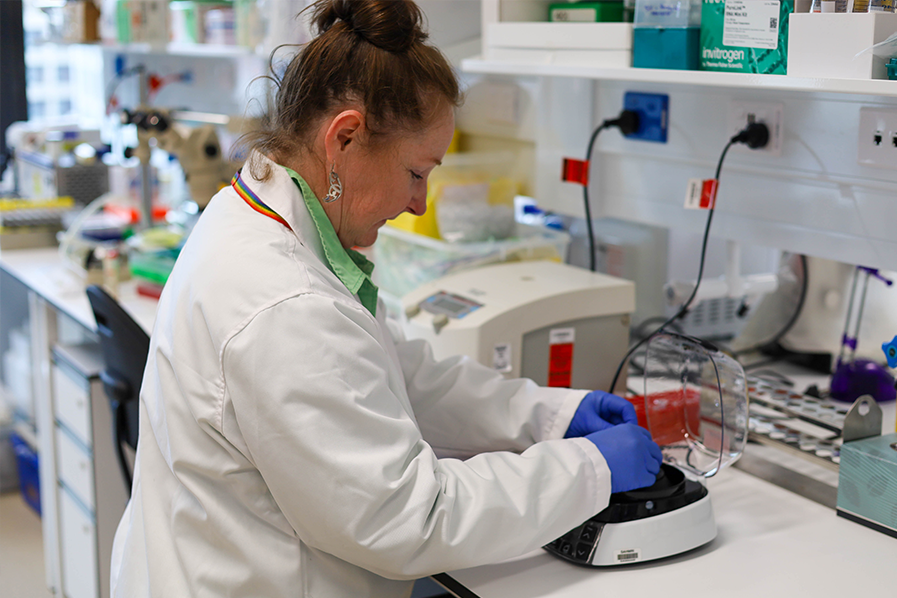
For families, these diagnoses are heartbreaking, and the lack of treatment options compounds their despair. That’s why the WCH Foundation is proud to support Professor Kim Hemsley’s groundbreaking research to evaluate NAL as a potential treatment for these devastating diseases.
This work will also lay the groundwork for clinical trials, bringing us closer to life-changing therapies for these devastating conditions.
“Wins are few and far between in medical research, and for us in this field, it’s personal. We know these families, and we care about these families. So to realise that you have the funding to potentially make a difference, that’s a very good day.” – Professor Kim Hemsley
Through this vital research, Prof. Hemsley and her team are working to transform the future for children living with childhood dementia. By building on promising laboratory findings, this project has the potential to bring life-changing treatments within reach for children and families affected by this devastating disease.
Find out more about the research we support, here.