For families affected by Morquio syndrome (MPS IV), life takes a heartbreaking turn. While children may appear healthy at birth, they soon begin to regress, developing severe skeletal abnormalities that lead to permanent disability, chronic pain, and tragically, a shortened lifespan.
Morquio syndrome comes in two forms type A (MPS IVA) and type B (MPS IVB). Current treatments offer little relief. For type A, enzyme therapy can ease some symptoms, but it does not address the painful bone problems that severely impact a child’s quality of life. For type B, there are no approved treatments at all. Families are left with few options and an urgent need for research and hope.
One of the biggest challenges in finding effective therapies is the lack of reliable animal models that mimic the disease as it appears in children. Existing mouse and rat models fail to replicate the severe bone defects that make Morquio syndrome so debilitating. Without better models, researchers are limited in their ability to test new treatments effectively and efficiently.
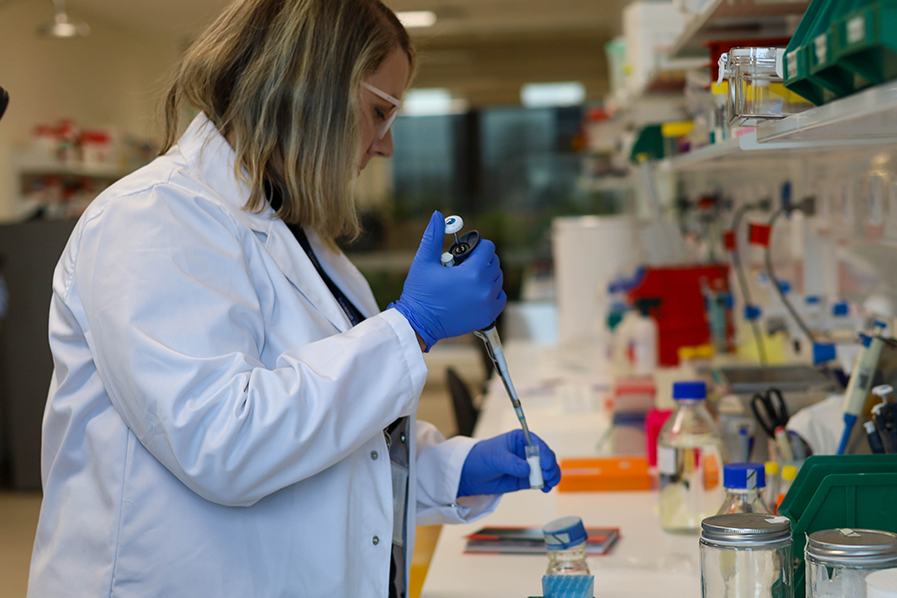
That’s why the WCH Foundation is proud to support Dr. Karissa Barthelson’s groundbreaking work to develop zebrafish models of Morquio syndrome. Zebrafish, with their genetic similarities to humans and bone development pathways that closely mirror our own, offer a promising new avenue for research. Their small size and rapid growth also make them ideal for large-scale therapeutic testing.
“Zebrafish are the second most common model organism in biomedical research, after rodents. Biologically, when we compare humans to zebrafish, the way that our bones and zebrafish bones develop, there’s a lot of similarities.” – Dr Karissa Barthelson
This work has the potential to accelerate global research into Morquio syndrome, opening new possibilities for treatment and offering hope to children and families who currently have none.
This vital research is funded through the Malcolm Douglas Grant Research Fund, a memorial fund established to support international-standard research into the causes and treatments of Morquio syndrome, other mucopolysaccharidoses, and genetic disorders involving bone dysplasias within the lysosomal storage disorders group.
By charting new waters with zebrafish models, Dr. Barthelson’s work has the potential to transform the future for children living with Morquio syndrome.
Find out more about the research we support, here.