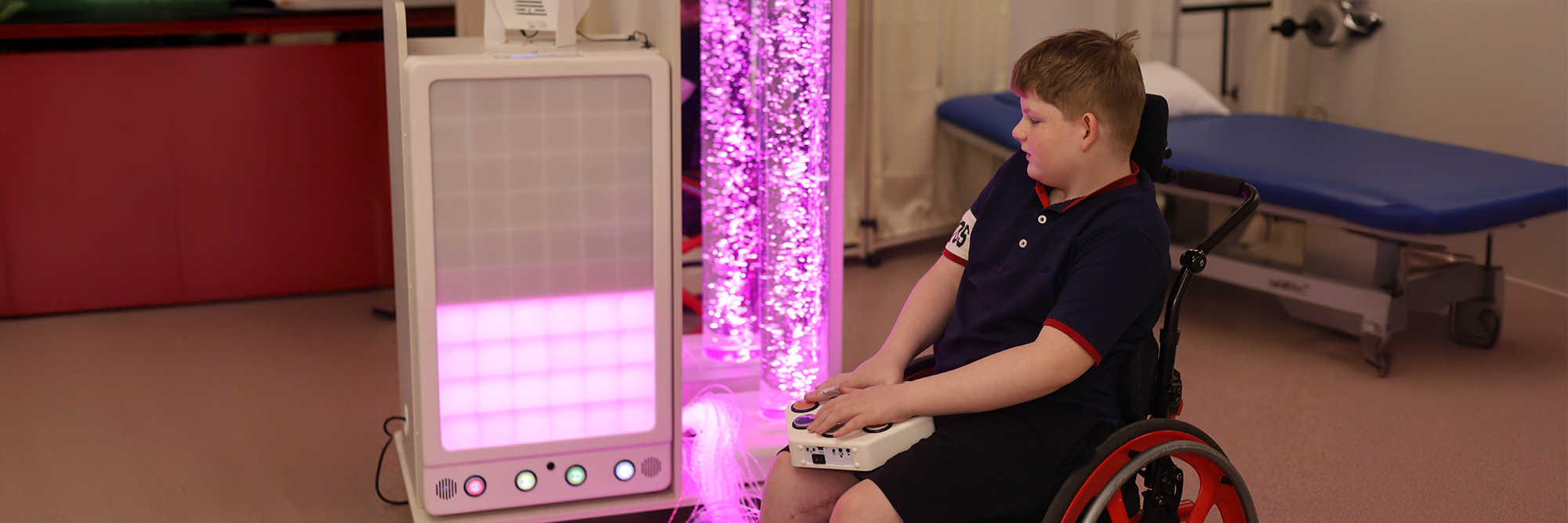
Children recovering from orthopaedic surgery at the Women’s and Children’s Hospital (WCH) now have access to a colourful new sensory cart, providing comfort and support during their rehabilitation, thanks to funding from the WCH Foundation.
The Rehabilitation Orthopaedic Service cares for children with neuromuscular and physical conditions, who often face significant pain, limited mobility, and overwhelming sensory environments during their hospital stay. For many of these young patients, bright lights, loud spaces, unfamiliar faces and stressful procedures can make recovery even harder.
To help ease these experiences, the team has introduced a mobile sensory cart, filled with carefully selected tools designed to comfort, distract and motivate children throughout their rehabilitation.
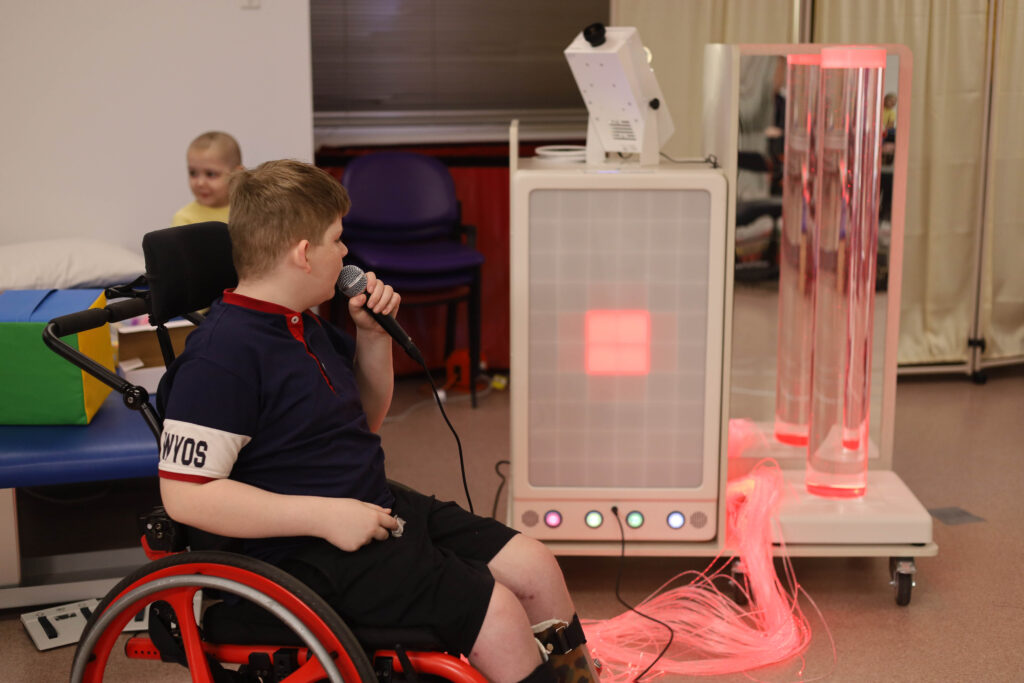
The cart features a gentle bubble tube, a projector that washes the room in soft movement, fibre-optic strands to touch and explore, an infinity wall mirror, and an interactive panel that lights up and responds to clapping, talking and music.
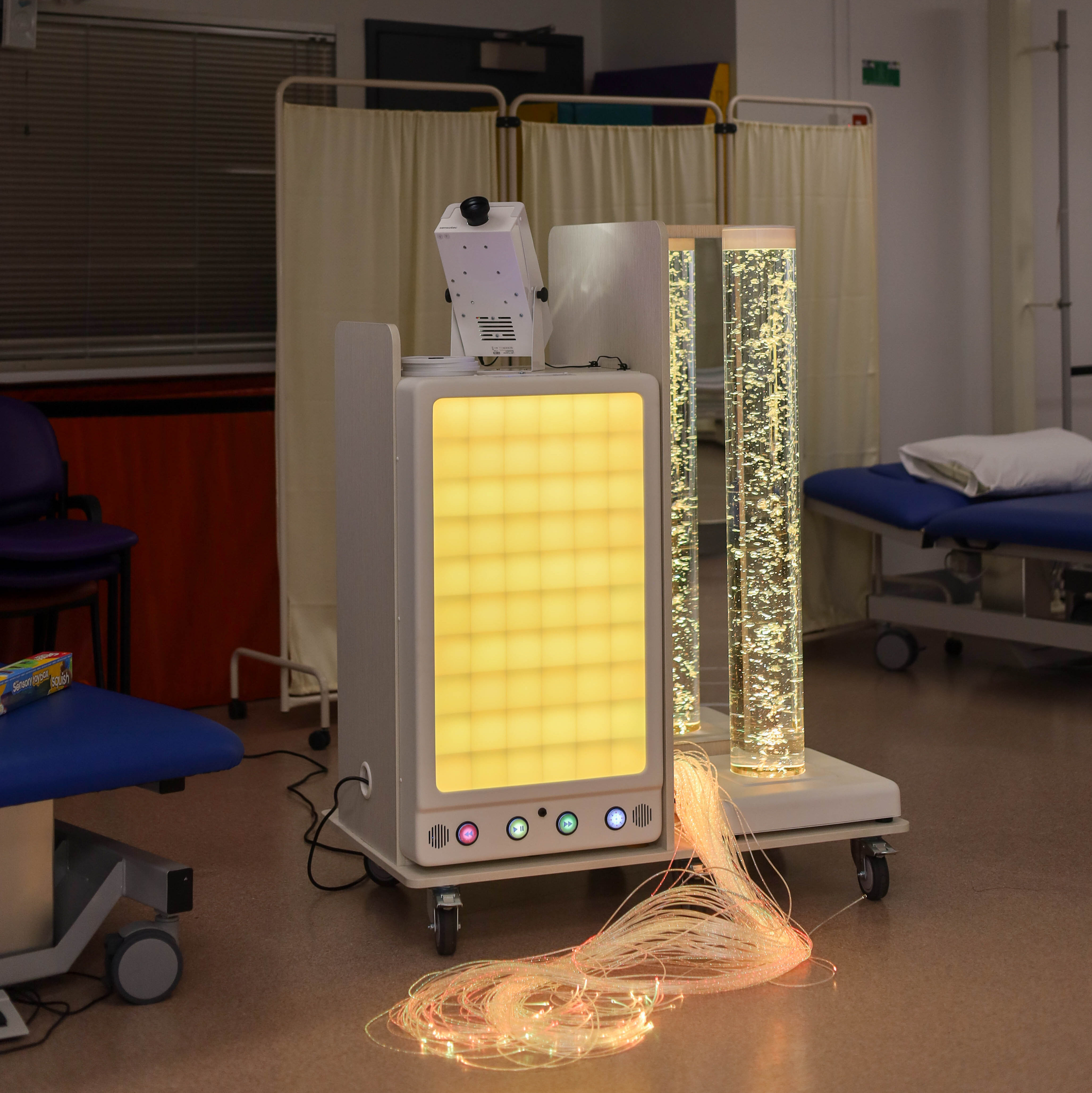
These sensory tools are already helping children feel more grounded and calm, providing positive distraction from pain and reducing the stress of procedures such as cast removal, blood tests and cannula insertions.
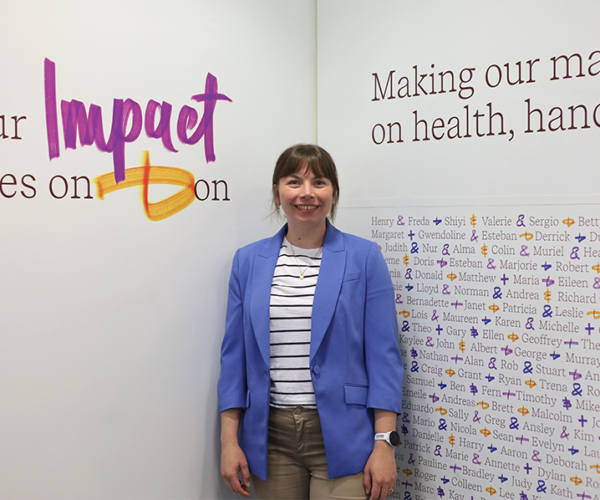
Rebecca Appleby, Occupational Therapist at the WCH, shared that “’Hospitals can feel overwhelming and unfamiliar for children and their families.”
“By meeting their sensory needs, we can reduce stress and help individuals to feel safe to participate in therapy and interventions, creating positive experiences in hospital.”
For 10-year-old Max, who is currently undergoing rehabilitation, the sensory cart has become part of his exercise program. Each exercise is assigned a colour, and during therapy sessions Max rolls a colour-coded cube to choose what comes next. The sensory cart then lights up in the same colour, helping guide and motivate him through each exercise.
“It’s really cool,” Max said with a grin. “I rate it nine out of ten.”
Seeing children engage so positively with the cart has been especially meaningful for the team.
Rebecca says, “It’s been so exciting to see children like Max be able to enjoy the cart, and to be able to meet their needs in a creative, accessible and fun way.”
When children’s sensory needs are better met, they feel safer, more regulated and more able to participate in therapy, which can support faster recovery and earlier discharge.
The WCH Foundation is proud to have funded this project, helping transform challenging moments into calmer, more positive experiences for children and families.