Children recovering from orthopaedic surgery at the Women’s and Children’s Hospital (WCH) now have access to a colourful new sensory cart, providing comfort and support during their rehabilitation, thanks to funding from the WCH Foundation.

The Rehabilitation Orthopaedic Service cares for children with neuromuscular and physical conditions, who often face significant pain, limited mobility, and overwhelming sensory environments during their hospital stay. For many of these young patients, bright lights, loud spaces, unfamiliar faces and stressful procedures can make recovery even harder.

To help ease these experiences, the team has introduced a mobile sensory cart, filled with carefully selected tools designed to comfort, distract and motivate children throughout their rehabilitation.

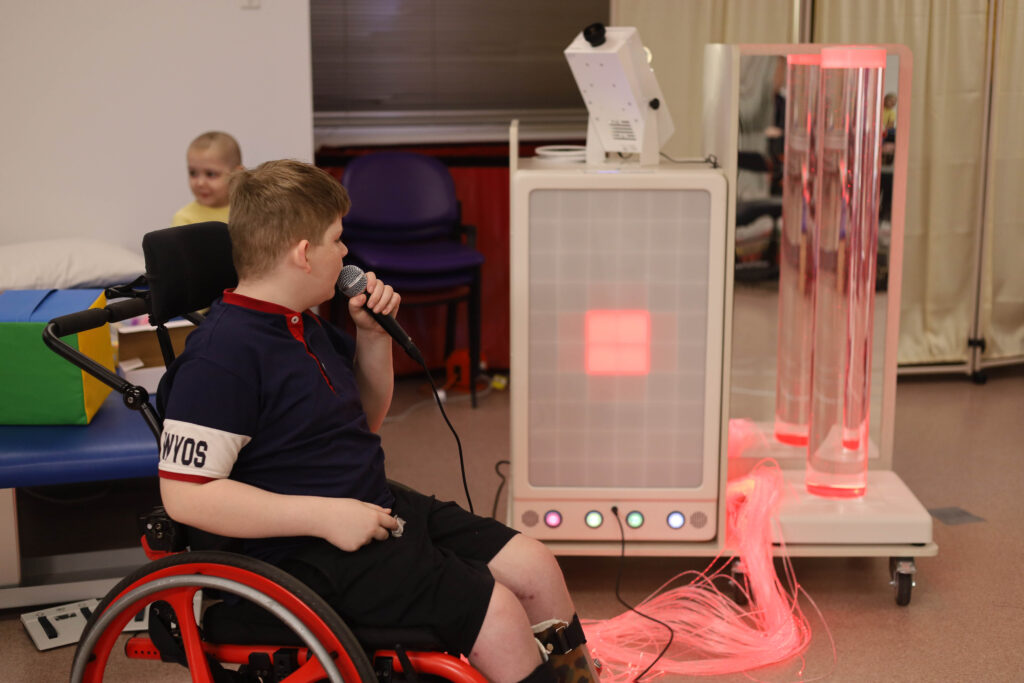
The cart features a gentle bubble tube, a projector that washes the room in soft movement, fibre-optic strands to touch and explore, an infinity wall mirror, and an interactive panel that lights up and responds to clapping, talking and music.
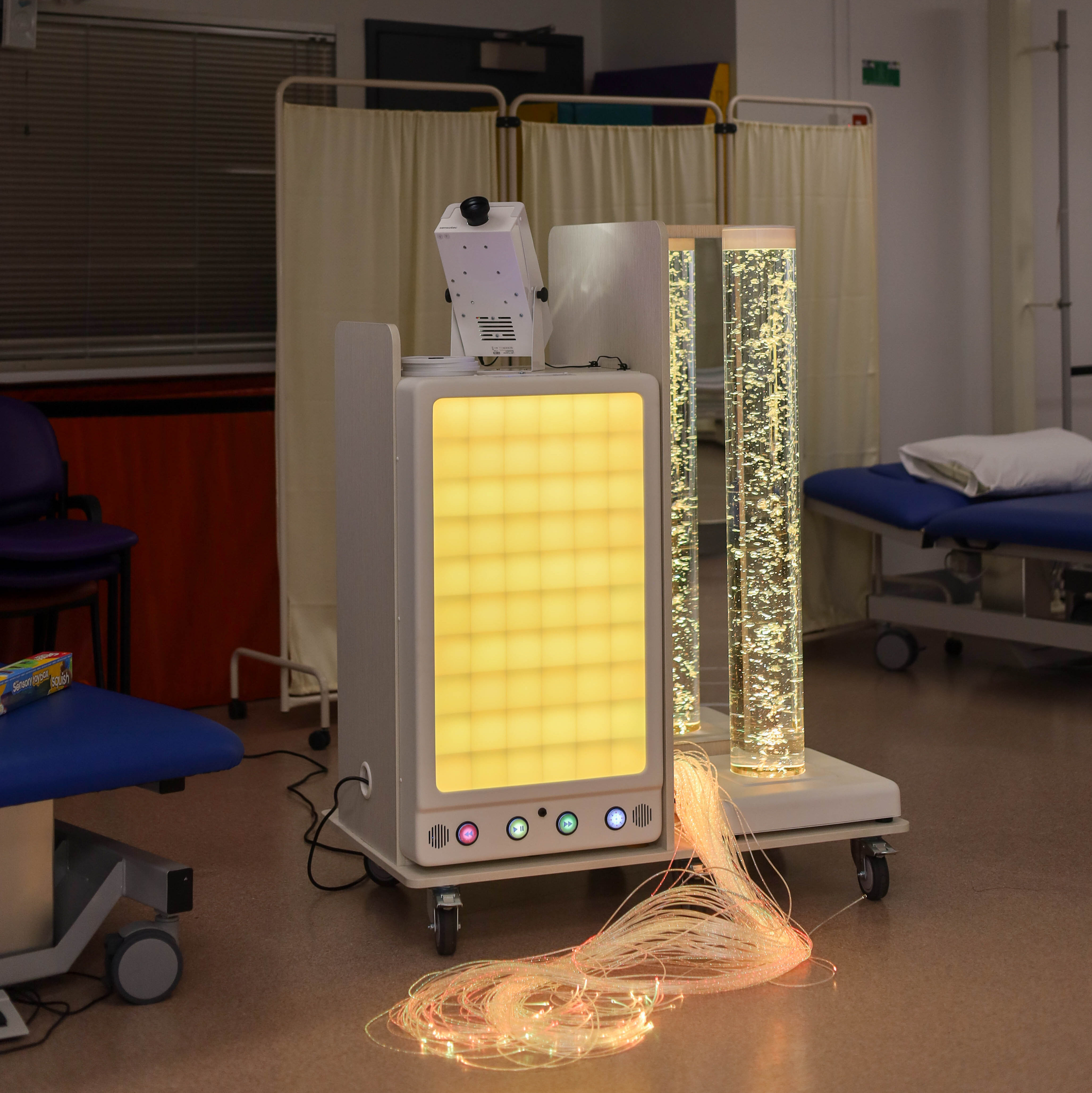
These sensory tools are already helping children feel more grounded and calm, providing positive distraction from pain and reducing the stress of procedures such as cast removal, blood tests and cannula insertions.

Rebecca Appleby, Occupational Therapist at the WCH, shared that “’Hospitals can feel overwhelming and unfamiliar for children and their families.”

“By meeting their sensory needs, we can reduce stress and help individuals to feel safe to participate in therapy and interventions, creating positive experiences in hospital.”

For 10-year-old Max, who is currently undergoing rehabilitation, the sensory cart has become part of his exercise program. Each exercise is assigned a colour, and during therapy sessions Max rolls a colour-coded cube to choose what comes next. The sensory cart then lights up in the same colour, helping guide and motivate him through each exercise.

“It’s really cool,” Max said with a grin. “I rate it nine out of ten.”

Seeing children engage so positively with the cart has been especially meaningful for the team.

Rebecca says, “It’s been so exciting to see children like Max be able to enjoy the cart, and to be able to meet their needs in a creative, accessible and fun way.”

When children’s sensory needs are better met, they feel safer, more regulated and more able to participate in therapy, which can support faster recovery and earlier discharge.

The WCH Foundation is proud to have funded this project, helping transform challenging moments into calmer, more positive experiences for children and families.

We are proud to share that we have helped fund new engagement boards, equipped at every inpatient bedside across the Women’s and Children’s Health Network.

These boards were thoughtfully co-designed with clinicians, consumers and families. Their purpose is simple yet powerful: to support clearer, more meaningful conversations about each patient’s care and what matters most to them. The boards include dedicated spaces to write messages and questions for staff, note how the patient is feeling and share their daily goals.

Working alongside Aboriginal consumers and staff, a version has also been developed to create culturally safe, respectful and meaningful engagement for Aboriginal patients and families.

By empowering shared decision making, the engagement boards help patients and families feel informed, involved and confident in their care journey, while also acting as an important tool for clinicians to share patient information.

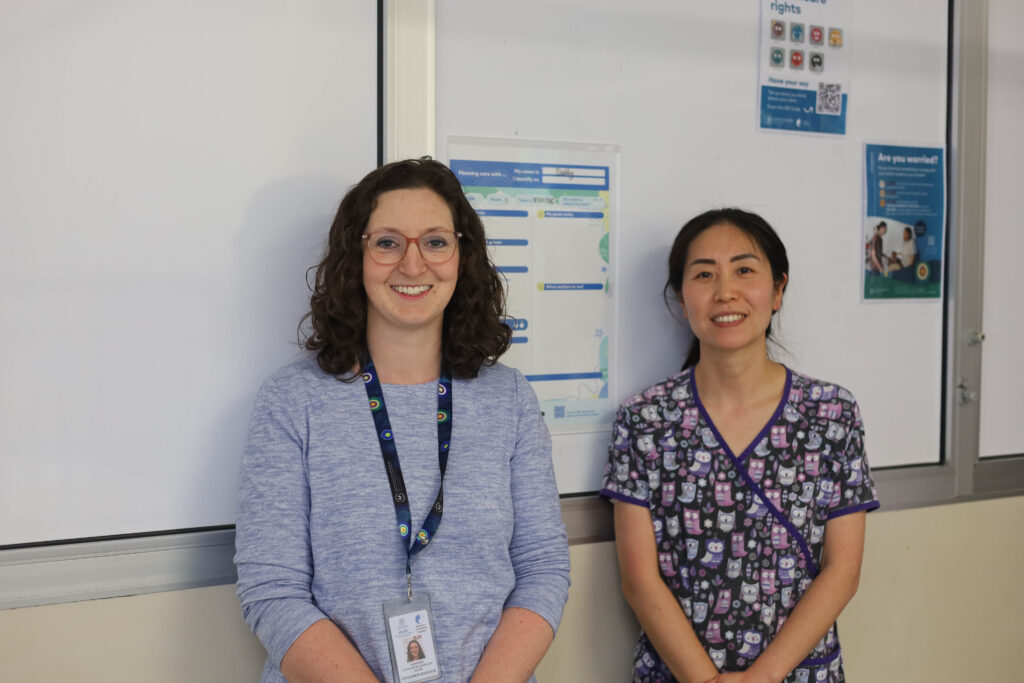
Consumer Advocate Hannah and Registered Nurse Sunny, who were involved in the project.

We’re incredibly grateful to everyone involved in bringing this initiative to life. These small moments of connection and communication can make a profound difference to the wellbeing and experience of families during their hospital stay and we are honoured to help make that impact possible.

The Audiology Department at the Women’s and Children’s Hospital (WCH) provides diagnostic hearing assessments to more than 5000 children each year, seeing a variety of inpatients and outpatients of different ages and varying degrees of complexity.

We are proud to support this service, funding vital equipment and projects.

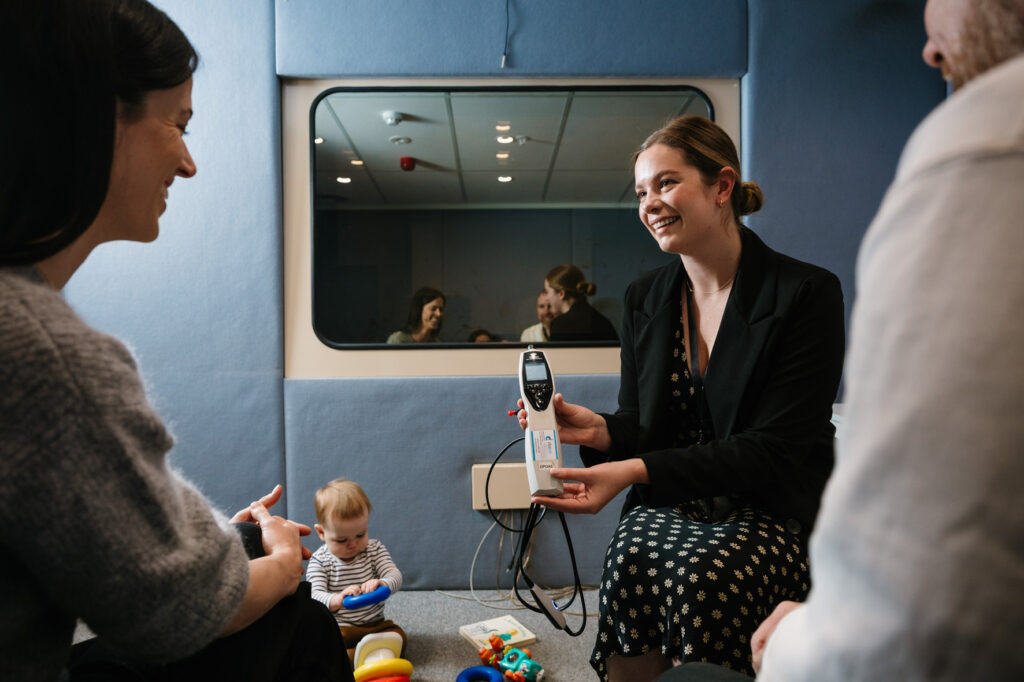
The Titan Tympanometer is a versatile, portable tool that allows the Audiology team to assess both middle ear health and cochlear function. Although they are regularly used in clinics at the WCH, they are also very useful in Outreach services, including Aboriginal ear health clinics.

We are pleased to be able to support the purchase of vital equipment, enabling quality service delivery at the WCH, and into rural and remote communities across South Australia and cross border communities.

Phoebe Hall, Paediatric Audiologist, shares her gratitude:

“The Audiology Department sincerely thanks the WCH Foundation for their generous support in purchasing the new Titan device. This valuable contribution enables us to provide high-quality care and services to our patients, both at the hospital, and in the community”.

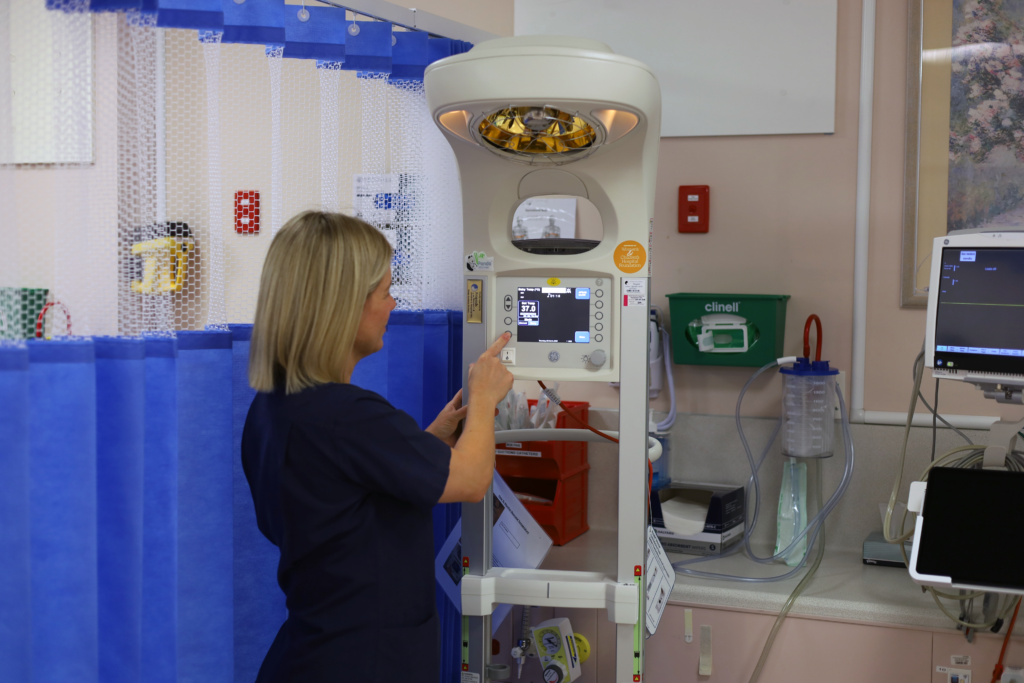
Thanks to a new radiant overhead heater acquired for the Women’s and Children’s Hospital delivery suite, newborns are now receiving the care and comfort they need from their very first moments.

For newborns, maintaining stable body temperature in the first few hours of life is crucial. Hypothermia in neonates can lead to serious complications and, in some cases, result in unnecessary admissions to the Special Care Baby Unit (SCBU), separating babies from their mothers in those critical early bonding moments.

Midwife Jamie Logan explains the importance of the infant warmer, sharing that “neonates who are growth restricted, small for gestational age, or born to diabetic mothers are at a higher risk of becoming hypothermic during the postnatal period.” Having this specialised equipment in the delivery suite means these babies can be continuously monitored during skin-to-skin contact with their parents while also receiving radiant heat if necessary.

Already, they’re seeing results, with a 78% success rate for at-risk newborns who use the warmer avoiding SCBU admission.

“We anticipate that this technology will be invaluable in promoting family-centred care,” says Jamie.

Keeping mothers and babies together from the very beginning supports their bond, reduces stress, and improves outcomes for everyone involved.

A heartfelt thank you to Shannon Fleming, LOT.100, and special guest chefs whose efforts with Collab for a Cause raised almost $70,000, helping make this vital project a reality. Together, we are helping South Australian babies, children and their families thrive from the very beginning.

Sign up for our latest news

"*" indicates required fields

This field is for validation purposes and should be left unchanged.

Name *

Name*

Email *

Email*