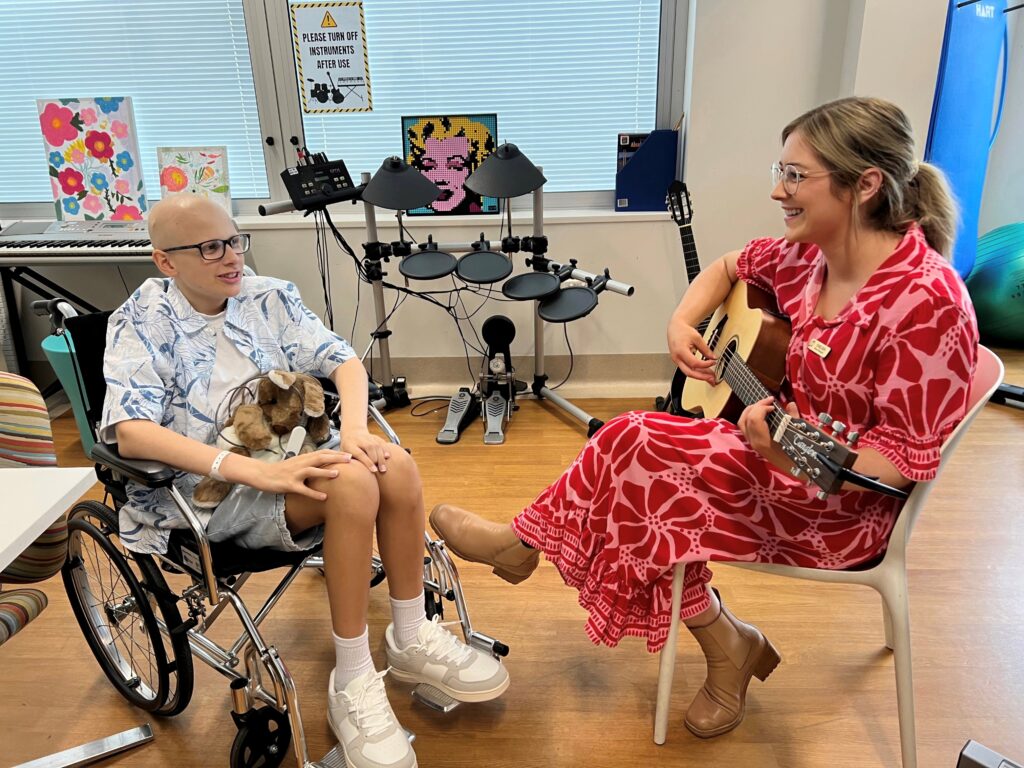
The Women’s & Children’s Hospital Foundation (WCH Foundation) is proud to announce its partnership in the groundbreaking Health Songbook Project, a transformative initiative that introduces Australia’s first music therapy songbook tailored for Aboriginal peoples undergoing health treatment.
This innovative resource, developed by the University of Adelaide’s Elder Conservatorium’s Centre for Aboriginal Studies in Music (CASM) in partnership with the WCH Foundation, features 20 songs representing 14 Indigenous language groups. The songbook is freely available online, offering professionally produced recordings, sheet music, lyric sheets, and composer background notes to support music therapists in clinical and community settings.
The WCH Foundation Arts in Health program played a pivotal role in connecting the research team, led by CASM Co-Director and Bundjalung man Grayson Rotumah, with Music Therapists across South Australia and the Australian Music Therapy Association. These connections enabled vital discussions about the challenges music therapists faced and the resources they needed to better support culturally based care for Indigenous families. This input shaped the development of the songbook, ensuring it met the needs of practitioners and patients alike.
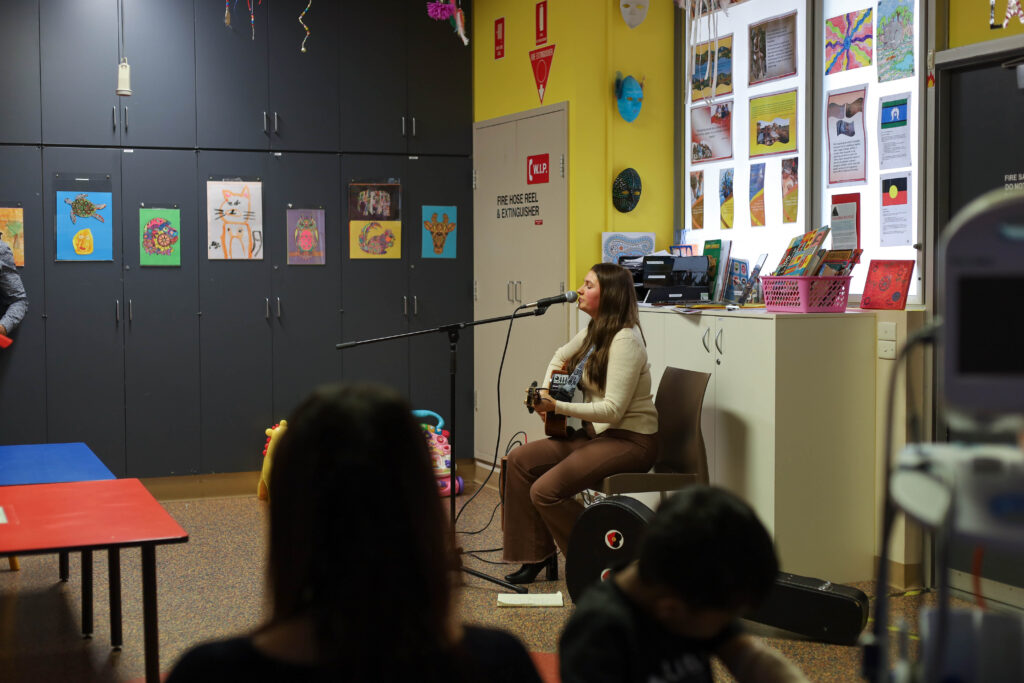
“Before this, music therapists had no culturally appropriate resources to draw on when engaging with First Nations patients. This often made it difficult to build trust and understanding,” Rotumah explained.
This resource provides music, language, and stories that can act as a bridge to Aboriginal patients, who are statistically over-represented in our hospital system.”
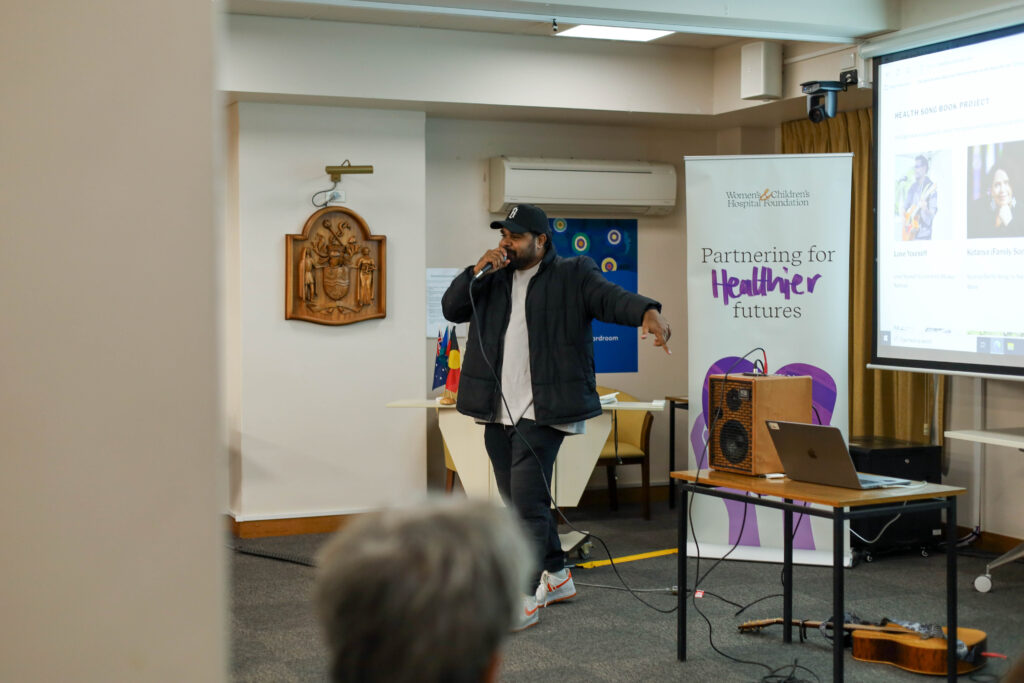
The Health Song book Project not only bridges cultural divides but also celebrates the richness of Aboriginal languages and music. It includes contributions in languages such as Kaurna, Ngarrindjeri, Gunditjmara, and Torres Strait Islander languages, among others. Most of the music was newly composed, blending contemporary therapeutic practices with Indigenous cultural expression.
Music therapy, which uses rhythm, melody, and harmony to address physical, emotional, and social needs, is a vital tool in health care. The songbook has already received enthusiastic feedback from therapists eager to integrate it into their practice.
The WCH Foundation is honoured to have contributed to this meaningful initiative, which not only enhances health care but also fosters cultural connection and healing. The Health Songbook Project is a testament to the power of collaboration and the importance of culturally sensitive care.
For more information, visit the Health Songbook Project.